
Introduction
Replacing all or most of your teeth with dental implants can be a significant financial decision. Unlike traditional dentures, full-mouth dental implants use surgically placed titanium or other approved implant materials to support replacement teeth. They can provide a stable restoration designed to improve chewing function, appearance, and overall oral health.
However, one of the biggest questions patients ask before starting treatment is: How much do full mouth dental implants cost in the United States?
The answer depends on several factors, including whether you need one or both dental arches restored, the number of implants required, the restoration material, your existing bone density, and whether additional procedures such as tooth extractions or bone grafting are necessary.
A full-mouth restoration may involve considerably more than purchasing implants. Patients may also pay for diagnostic imaging, surgical placement, temporary teeth, custom prosthetics, anesthesia, follow-up appointments, and maintenance.
Another important consideration is that dental clinics sometimes advertise a price for one arch rather than the entire mouth. A treatment advertised as an affordable full-mouth solution may therefore cost considerably more when both upper and lower arches are included.
This guide explains full mouth dental implants cost in the USA, compares different treatment approaches, examines the procedures and materials involved, and highlights expenses patients should consider before accepting a treatment estimate.
It also explains how insurance, Medicare, financing, and tax-advantaged healthcare accounts may affect the final amount patients pay.
How Much Do Full Mouth Dental Implants Cost in the USA?
Full-mouth dental implants can cost approximately $30,000 to $70,000 or more for both upper and lower arches in the United States. The final amount depends on the implant system, restoration design, materials, surgical complexity, and additional dental procedures.
For budgeting purposes, the following ranges provide a starting point. They are broad planning estimates rather than guaranteed national averages or standardized dental fees.
| Treatment type | Estimated US cost |
| All-on-4, one arch | 15,000–35,000 |
| All-on-4, both arches | 30,000–70,000 |
| All-on-6, one arch | 20,000–40,000 |
| All-on-6, both arches | 40,000–80,000 |
| Implant-supported removable denture, one arch | 5,000–15,000 |
| Implant-supported fixed bridge, one arch | 15,000–35,000 |
| Complex full-mouth reconstruction | 70,000–100,000+ |
These figures are indicative market estimates. Actual fees may fall outside these ranges. Treatment designs are not interchangeable, and a removable implant-retained denture is different from a permanently fixed full-arch bridge.
Published 2026 pricing guides also show substantial variation in full-mouth implant costs. For example, NewMouth’s dental implant cost guide provides additional comparisons of implant-supported treatment options.
Why Is There Such a Large Price Difference?
Two patients who both need full-mouth dental implants may receive very different treatment estimates.
Consider these situations:
- Patient A: Has sufficient jawbone density, healthy gums, and no major underlying dental problems. The patient may qualify for a relatively straightforward full-arch restoration.
- Patient B: Has significant bone loss, failing teeth, gum disease, and requires multiple extractions and bone grafting. The treatment plan may involve additional surgery and a longer healing period.
Even though both patients need replacement teeth across their mouths, their clinical requirements are different.
The most important point is to compare complete treatment plans rather than assuming that every full-mouth implant package includes the same services.
Understanding One Arch vs. Full-Mouth Dental Implants
One of the most common pricing misunderstandings involves the difference between one dental arch and a full-mouth restoration.
The human mouth has two dental arches:
- Upper arch (maxillary): The upper jaw, which normally supports 14 teeth when wisdom teeth are excluded.
- Lower arch (mandibular): The lower jaw, which normally supports another 14 teeth when wisdom teeth are excluded.
A full-mouth dental implant procedure generally means replacing the teeth in both arches.
Upper Arch Dental Implants
Upper arch restoration involves replacing missing or failing teeth in the upper jaw.
The upper jaw can present additional surgical challenges because of its relationship with the maxillary sinuses. Patients with insufficient bone height in the back of the upper jaw may need a sinus lift or another bone augmentation procedure.
These additional treatments can increase the total cost.
Lower Arch Dental Implants
Lower arch restoration involves placing implants in the lower jaw.
The lower jaw has different anatomical considerations, particularly the location of the inferior alveolar nerve. Implant placement must be carefully planned to avoid nerve injury.
Bone quality, available space, bite alignment, and the patient’s existing dental condition all influence treatment planning.
What Is the Difference Between One Arch and Both Arches?
| Treatment | What it includes |
| Upper arch restoration | Replacement teeth supported by implants in the upper jaw |
| Lower arch restoration | Replacement teeth supported by implants in the lower jaw |
| Full-mouth restoration | Replacement teeth for both upper and lower jaws |
If a dental clinic advertises full-mouth implants for $20,000, ask whether that amount covers one arch or both.
Some advertisements use the term full-mouth restoration when they are actually referring to one arch. Clarifying this before paying a deposit can prevent unexpected financial commitments.
Full Mouth Dental Implant Procedures and Their Costs
The number and arrangement of implants influence the treatment cost. Different procedures are designed for different clinical situations.
Here are the most common options patients encounter when comparing full-mouth dental implant treatments.
1. All-on-4 Dental Implants
All-on-4 is a full-arch restoration approach that uses four strategically positioned dental implants to support a fixed bridge of replacement teeth.
Typically, two implants are positioned toward the front of the jaw, while the other two may be angled to use available bone more effectively.
This approach can reduce the number of implants required compared with replacing every missing tooth individually.
Estimated cost:
- One arch: 15,000–35,000
- Both arches: 30,000–70,000
Potential advantages:
- Fewer implants than individual tooth replacement.
- Fixed replacement teeth.
- May reduce the need for extensive bone grafting in selected patients.
- Can provide a complete arch of replacement teeth.
Potential disadvantages:
- Not suitable for every patient.
- Requires careful surgical planning.
- Prosthetic repairs or replacement may create additional expenses.
- Cleaning beneath the bridge requires specific techniques.
The four-implant approach is not automatically the cheapest or best option. Implant positioning, bone quality, prosthetic design, and bite forces determine whether it is appropriate.
2. All-on-6 Dental Implants
Hướng Dẫn Về Cấy Ghép Implant Nha Khoa All On 6 Tại Việt Nam | Greenfield Dental
All-on-6 uses six implants to support a full-arch fixed restoration.
The additional implants may provide more support and help distribute chewing forces across the arch. However, whether six implants are preferable to four depends on the patient’s anatomy and treatment requirements.
Estimated cost:
- One arch: 20,000–40,000
- Both arches: 40,000–80,000
Potential advantages:
- Additional implant support.
- Greater flexibility in some prosthetic designs.
- May be appropriate when bone availability allows additional implant placement.
Potential disadvantages:
- Higher initial treatment cost.
- More surgical components and implant placements.
- May require additional procedures.
- More implants do not guarantee a better outcome.
An important consideration is that All-on-6 is not necessarily twice as expensive as All-on-4. The final cost depends on the entire treatment package, not simply the number of implants.
3. Implant-Supported Dentures
Implant Overdentures Clinton Township, MI | Clinton Township Dental Implant Dentist
dentalimplantsclintontownshipmi.com
Implant-supported dentures are another option for patients who need to replace most or all their teeth.
Unlike conventional dentures, these restorations connect to dental implants for improved retention and stability.
There are two common designs:
Implant-retained removable dentures
These dentures attach to implants through special connectors. Patients can remove them for cleaning.
Implant-supported fixed dentures
These restorations remain attached to implants and are generally removed by a dental professional when maintenance is necessary.
Estimated cost:
- Removable implant-supported denture: 5,000–15,000 per arch.
- Fixed implant-supported restoration: approximately 15,000–35,000 per arch.
The exact number of implants, attachment system, materials, and laboratory work affect the price.
Patients should not compare removable overdenture pricing directly with fixed All-on-4 or All-on-6 pricing because they provide different restoration designs and maintenance requirements.
4. Individual Dental Implants for Full-Mouth Replacement
Jak správně určit a pojmenovat zuby: Detailní průvodce
Some patients may need individual implants to replace multiple missing teeth rather than a single full-arch bridge.
This approach involves placing separate implants to support individual crowns or smaller bridges.
The cost can become considerably higher when many teeth require individual restoration because each implant may require its own surgical and prosthetic components.
For example, replacing several teeth individually may involve:
- Multiple implant fixtures.
- Separate abutments.
- Individual crowns or smaller bridges.
- Additional surgical appointments.
- More laboratory work.
However, individual implants are not always necessary for every missing tooth. An implant-supported bridge may replace multiple adjacent teeth using fewer implants.
The dentist should explain why an individual restoration or full-arch prosthesis is being recommended.
What Factors Affect Full Mouth Dental Implants Cost?
The full mouth dental implants cost depends on more than the number of implants. Several clinical and financial variables determine the final treatment estimate.
1. Number of Dental Implants
The number of implants directly affects surgical requirements and material expenses.
A treatment plan using four implants per arch may have a different cost from one using six or eight implants.
However, implant quantity should be based on clinical requirements rather than selecting the lowest-priced option.
2. Jawbone Density and Bone Loss
Patients who have been missing teeth for several years may experience jawbone deterioration.
When the available bone cannot adequately support an implant, the dentist may recommend bone grafting.
Bone grafting involves adding or rebuilding bone tissue to improve the available foundation for implant placement.
The procedure can increase:
- Surgical fees.
- Material costs.
- Recovery time.
- Number of appointments.
Patients with substantial bone loss may require more complex treatment planning.
3. Tooth Extractions
Some patients still have damaged or failing teeth that need removal before implant placement.
Extraction costs depend on the number of teeth, their condition, and whether surgical extraction is necessary.
Full-mouth restoration may involve multiple extractions, particularly when a patient has advanced dental decay or periodontal disease.
Check whether the advertised implant package includes all required extractions.
4. Dentist and Specialist Experience
Full-arch implant treatment may involve several dental professionals, including:
- General dentists.
- Prosthodontists.
- Periodontists.
- Oral and maxillofacial surgeons.
Their training, experience, responsibilities, and practice fees can affect the total cost.
Some treatment plans involve one clinician performing multiple stages, while others require coordination between surgical and restorative specialists.
Patients should evaluate professional qualifications, treatment planning, and follow-up arrangements instead of selecting a provider based exclusively on price.
5. Geographic Location
Dental implant fees vary across the United States.
Clinics in metropolitan areas such as New York, Los Angeles, San Francisco, and Miami may have different operating expenses from practices in smaller communities.
Factors include:
- Office rental costs.
- Staff salaries.
- Laboratory expenses.
- Equipment and technology.
- Local demand.
- Provider pricing policies.
A higher price does not automatically indicate better treatment. Comparing itemized estimates from multiple qualified providers is more useful.
6. Diagnostic Imaging and Technology
Full-arch treatment often requires detailed diagnostic planning.
Depending on the clinical situation, the dentist may recommend:
- Panoramic dental X-rays.
- Intraoral imaging.
- Cone Beam Computed Tomography (CBCT).
- Digital impressions.
- Computer-assisted implant planning.
These technologies help clinicians evaluate the jawbone, implant positioning, and surrounding anatomical structures.
Ask whether diagnostic imaging and surgical planning fees are included in the quoted price.
7. Anesthesia and Sedation
The type of anesthesia can also affect the treatment estimate.
Common options include:
- Local anesthesia.
- Nitrous oxide.
- Oral sedation.
- Intravenous (IV) sedation.
- General anesthesia in selected circumstances.
The appropriate option depends on the procedure, patient needs, medical history, and provider’s clinical judgment.
Sedation may involve a separate professional or facility fee. Ask whether those costs are included.
8. Temporary and Permanent Replacement Teeth
Many full-arch treatment plans involve temporary teeth during the healing period.
Temporary restorations allow patients to have replacement teeth while the implants integrate with the surrounding bone.
After healing, the temporary restoration may be replaced with a final prosthesis.
The cost depends on:
- Temporary restoration design.
- Final restoration material.
- Laboratory fabrication.
- Number of adjustments.
- Replacement requirements.
A package that includes temporary teeth but excludes the final bridge is not equivalent to a complete restoration package.
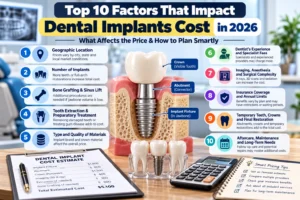
For more information about pricing variables, see our guide to 10 factors that impact dental implants cost.
Dental Implant Materials: Which Option Affects the Price?
The materials used for implant fixtures and replacement teeth can significantly influence the total cost.
It is important to distinguish between the implant material placed inside the jawbone and the material used for the visible prosthetic teeth.
Titanium Dental Implants
Стоматология в Ростове-на-Дону – UniverDent
Titanium and titanium alloys are commonly used for dental implant fixtures.
Titanium is valued for its biocompatibility and established clinical use in implant dentistry.
Potential benefits include:
- Established clinical history.
- Compatibility with bone integration.
- Availability across many implant systems.
- Multiple implant designs and sizes.
The FDA identifies titanium and titanium alloys among the commonly used materials in dental implant systems.
Zirconia Dental Implants
Zirconia is a ceramic material used in certain dental implant systems.
Some patients and clinicians may consider zirconia for specific clinical or aesthetic reasons.
Potential characteristics include:
- Tooth-colored ceramic appearance.
- Metal-free composition.
- Biocompatible material properties.
However, zirconia implants are not automatically suitable for every full-mouth restoration. Availability, implant design, clinical evidence, and the patient’s anatomy should be considered.
Zirconia Dental Bridges
Zirconia is also used for the visible full-arch prosthesis.
A zirconia bridge can offer a natural-looking appearance and a durable restoration when properly designed and maintained.
However, the price depends on the type of zirconia, fabrication process, laboratory fees, and prosthetic design.
Acrylic and Titanium-Reinforced Prosthetics
Some full-arch restorations use acrylic teeth attached to a metal framework.
These designs can have a lower initial price than certain premium zirconia restorations.
However, acrylic teeth may experience wear or damage over time and could require maintenance or replacement.
Material Comparison
| Material | Common application | Cost consideration |
| Titanium | Implant fixtures | Established implant material |
| Zirconia | Implant fixtures and prosthetic bridges | Depends on system and fabrication |
| Acrylic | Temporary or final prosthetic teeth | Often lower initial material cost |
| Porcelain | Crowns and selected restorations | Depends on design and laboratory work |
| Titanium framework | Reinforcement for prosthetics | Additional framework and laboratory costs |
There is no single material that is best for every patient. The dentist should explain the advantages, limitations, expected maintenance, and cost implications of each option.
For additional information, review the FDA’s dental implant safety guidance.
What Procedures Are Included in Full Mouth Dental Implant Treatment?
A full-mouth restoration generally involves multiple stages rather than a single appointment.
Understanding these stages makes it easier to identify which costs should appear in the dental estimate.
Step 1: Initial Consultation
The dentist examines your mouth, evaluates your existing teeth and gums, and reviews your medical history.
The consultation helps determine whether implants are appropriate and which restoration options may be considered.
Step 2: Diagnostic Imaging
Dental X-rays and potentially a CBCT scan are used to assess jawbone structure and identify important anatomical features.
This information supports implant positioning and surgical planning.
Step 3: Tooth Extraction and Preparatory Treatment
Damaged teeth may need to be removed.
Patients with gum disease or infection may require treatment before implant placement.
Bone grafting may also be necessary in areas where insufficient bone is available.
Step 4: Implant Placement Surgery
The dental implants are surgically placed into the jawbone.
The procedure may be performed under local anesthesia or another clinically appropriate form of sedation.
Step 5: Temporary Restoration
Some patients receive temporary replacement teeth during healing.
Whether immediate temporary teeth are appropriate depends on implant stability, bone conditions, bite forces, and the overall treatment plan.
Step 6: Healing and Osseointegration
Osseointegration is the process through which the implant integrates with the surrounding bone.
This stage can take several months, depending on individual healing and treatment requirements.
Step 7: Final Prosthetic Placement
After the dental team determines that healing is sufficient, the final bridge or denture is attached.
The dentist evaluates the fit, bite alignment, comfort, and appearance.
Step 8: Maintenance and Follow-Up
Patients need regular professional examinations and appropriate daily cleaning.
The dental team may also check implant stability, prosthetic components, and surrounding gum health.
Not every patient follows exactly the same timeline. Some treatment plans can use immediate loading, while others require a longer staged process.
Hidden Costs Patients Should Consider
One of the biggest financial mistakes patients make is budgeting only for the advertised implant package.
Additional procedures and maintenance can increase the total amount.
The following expenses deserve particular attention:
| Additional expense | Why it may be required |
| Tooth extractions | Removal of damaged or failing teeth |
| Bone grafting | Insufficient jawbone volume |
| Sinus lift | Insufficient bone height in certain upper-jaw areas |
| CBCT imaging | Detailed three-dimensional planning |
| Sedation | Additional anesthesia requirements |
| Temporary teeth | Replacement teeth during healing |
| Final prosthesis | Permanent bridge or denture |
| Follow-up appointments | Monitoring healing and fit |
| Repairs | Wear, fractures, or component problems |
| Maintenance | Professional cleaning and examinations |
A dental office may offer a fixed package price, but patients should ask what happens if additional procedures become necessary.
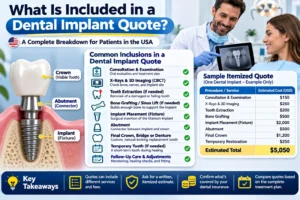
For a more detailed breakdown, read What Is Included in a Dental Implant Quote?.
Does Dental Insurance Cover Full Mouth Dental Implants?
Dental insurance coverage for full-mouth implants varies by insurer and individual policy.
Some plans provide benefits for certain implant-related procedures, while others exclude implant treatment or impose restrictions.
Possible covered services may include:
- Tooth extractions.
- Certain diagnostic examinations.
- Selected restorative procedures.
- Crowns or other eligible dental restorations.
- Some implant-related services, depending on the plan.
However, the insurer may not cover the entire implant procedure.
Understand Your Annual Maximum
Many dental insurance policies have annual maximum benefit limits.
For example, suppose your plan has a $2,000 annual maximum.
Even if your implant treatment costs $40,000, the insurance company will not automatically pay a percentage of the entire treatment cost without considering the plan’s coverage conditions and limits.
The actual benefit depends on covered procedures, deductibles, coinsurance, exclusions, and remaining annual benefits.
Check Waiting Periods
Some policies require patients to wait before receiving benefits for major dental procedures.
A missing-tooth clause may also affect whether a policy covers replacement of teeth lost before coverage began.
Request a Predetermination
Before starting treatment, ask the dental office to submit a pretreatment estimate to your insurer.
This can help establish which procedures may qualify for benefits and provide an estimate of your expected out-of-pocket expenses.
However, a predetermination is not necessarily a guarantee of final payment.
The American Dental Association explains common limitations in dental insurance plans.
Does Medicare Cover Full Mouth Dental Implants?
Original Medicare generally does not cover routine dental services, including most dental implants and dentures.
However, certain dental services may be covered when they are directly connected to specific covered medical treatments or situations.
For example, Medicare may cover certain dental services related to organ transplants, heart valve procedures, cancer treatment, or other qualifying medical circumstances.
Medicare Advantage plans may offer additional dental benefits, but coverage varies by plan.
Patients should verify:
- Whether their plan covers implant-related procedures.
- Whether there are annual benefit limits.
- Whether the dentist participates in the plan’s network.
- Whether prior authorization is required.
- Which services remain the patient’s responsibility.
Read the official Medicare dental services coverage information before assuming implants are covered.
Can You Use HSA or FSA Funds for Dental Implants?
Health Savings Accounts (HSAs) and Flexible Spending Accounts (FSAs) may help eligible patients manage dental treatment expenses.
Under applicable IRS rules, qualifying medical and dental expenses may be paid using these accounts.
However, patients should distinguish between eligible treatment expenses and unrelated costs.
For example:
- Eligible dental implant treatment may qualify as a medical expense.
- Cosmetic procedures performed solely to improve appearance may not qualify.
- HSA and FSA eligibility rules are not identical in every respect.
- Employer-sponsored FSA plans may have additional administrative requirements.
Before using these accounts, review:
- IRS Publication 502: Medical and Dental Expenses
- IRS Publication 969: Health Savings Accounts and Other Tax-Favored Health Plans
Patients should confirm eligibility with their account administrator or tax professional.
How to Finance Full Mouth Dental Implants
When patients cannot afford the entire treatment cost upfront, financing may help spread payments over time.
Several options are available in the United States.
1. Dental Office Payment Plans
Some dental offices offer installment arrangements that allow patients to pay in stages.
For example, payments may be scheduled around consultations, surgery, temporary teeth, and final restoration.
Ask whether the practice charges interest or administrative fees.
2. Third-Party Healthcare Financing
Healthcare financing companies may offer payment plans for eligible dental treatments.
Depending on the offer, financing may include promotional interest periods or fixed monthly payments.
However, patients should carefully review deferred-interest conditions, repayment deadlines, late fees, and the total repayment amount.
3. Personal Loans
A personal loan may provide funds to pay for treatment.
The interest rate and approval requirements depend on the lender, credit profile, loan amount, and repayment period.
Compare the annual percentage rate (APR), fees, and total amount payable rather than considering monthly payments alone.
4. Credit Cards
Credit cards can provide short-term payment flexibility.
However, carrying a large dental treatment balance at a high interest rate can substantially increase the total expense.
A promotional offer should not be treated as automatically interest-free unless the agreement’s conditions are fully understood.
Example: Financing a $30,000 Dental Treatment
The following example illustrates how repayment terms can affect the financial commitment.
Assume a patient finances $30,000 with a fixed 12% APR and no additional fees.
| Loan term | Approximate monthly payment | Total repayment |
| 12 months | $2,665 | $31,980 |
| 24 months | $1,412 | $33,890 |
| 36 months | $996 | $35,856 |
| 60 months | $667 | $40,040 |
These figures are illustrative estimates, not lender offers. Actual payments depend on the financing agreement, fees, and interest calculations.
For more guidance, see our article on Dental Implant Financing and Insurance: What to Know.
How to Compare Full Mouth Dental Implant Quotes
Getting multiple estimates is a practical way to understand the available treatment options and avoid paying for services you do not need.
However, comparing prices without checking what each quote includes can be misleading.
Consider the following example:
| Treatment component | Clinic A | Clinic B |
| Implant placement | Included | Included |
| Abutments | Included | Extra |
| Temporary teeth | Extra | Included |
| Final zirconia bridge | Included | Extra |
| Bone grafting | Extra | Extra |
| Follow-up appointments | Included | Limited |
| Advertised price | $35,000 | $28,000 |
Clinic B appears less expensive, but additional charges may make its final price higher.
Before selecting a provider, request an itemized estimate that identifies:
- The number of implants included.
- Whether the estimate covers one arch or both.
- The implant manufacturer and system.
- The material used for temporary and permanent teeth.
- Whether extractions and bone grafting are included.
- Whether anesthesia and sedation are included.
- The number of follow-up appointments.
- The policy for implant failure and prosthetic repairs.
- The expected payment schedule.
- Any additional fees that may arise during treatment.
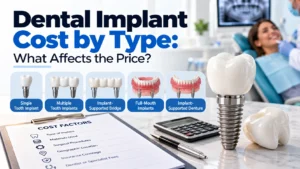
For a broader comparison of treatment types, visit our guide to Dental Implant Cost by Type: What Affects the Price?.
Are Full Mouth Dental Implants Worth the Cost?
Whether full-mouth dental implants are worth the investment depends on a patient’s oral health, treatment goals, financial situation, and long-term expectations.
Implant-supported restorations can provide several potential benefits.
Improved chewing function: Fixed implant-supported teeth may provide greater stability than conventional removable dentures, potentially making eating more comfortable.
Restoration of appearance: Replacement teeth can be designed to improve the appearance of a patient’s smile.
Jawbone support: Dental implants transfer forces to the surrounding bone and may help reduce the bone changes associated with missing teeth.
Improved denture stability: Implant-retained dentures can reduce movement compared with conventional dentures.
However, patients should also understand the limitations.
- Implant treatment involves surgery.
- Healing may take several months.
- Some patients need additional procedures.
- Implants require ongoing maintenance.
- Complications and implant failure are possible.
- Replacement prosthetics and repairs may create future expenses.
Dental implants are not maintenance-free, and no provider should guarantee that an implant will last a lifetime.
The FDA explains potential benefits, complications, and important considerations in its Dental Implants: What You Should Know resource.
How Long Do Full Mouth Dental Implants Last?
The lifespan of full-mouth dental implants depends on several factors, including implant integration, oral hygiene, general health, bite forces, and maintenance.
It is important to understand that the implant fixtures and the visible prosthetic teeth have different expected lifespans.
Implant Fixtures
The implant fixture is the component placed inside the jawbone.
With successful integration and appropriate maintenance, implant fixtures may remain functional for many years.
However, complications such as infection, peri-implant disease, bone loss, or mechanical problems can affect their longevity.
Dental Bridges and Prosthetics
The visible replacement teeth may require maintenance, repair, or eventual replacement.
Acrylic teeth, zirconia bridges, and other prosthetic designs have different material characteristics.
Their lifespan depends on the restoration, chewing forces, oral hygiene, and how well the patient follows maintenance recommendations.
How Can Patients Protect Their Investment?
Patients can help maintain their restorations by:
- Brushing regularly with appropriate cleaning tools.
- Cleaning underneath implant-supported bridges.
- Attending scheduled dental examinations.
- Following professional maintenance recommendations.
- Avoiding habits that place excessive force on replacement teeth.
- Reporting pain, looseness, swelling, or other unusual symptoms.
Smoking and uncontrolled diabetes can also affect healing and implant outcomes. Patients should discuss relevant health factors with their dental providers before surgery.
Can You Get Full Mouth Dental Implants with Bone Loss?
Yes, some patients with bone loss may still qualify for full-mouth dental implants.
However, the available treatment options depend on the amount and location of bone loss.
A dentist or implant specialist may recommend:
- Bone grafting.
- Ridge augmentation.
- Sinus lift procedures.
- Angled implant placement.
- Alternative implant designs.
- Specialized solutions for severe jawbone deficiencies.
For patients with significant upper-jaw bone loss, zygomatic implants may sometimes be considered. These specialized implants anchor into the cheekbone rather than relying exclusively on the upper jaw.
They are complex procedures and require appropriate specialist evaluation.
Not every patient needs bone grafting, and not every patient with bone loss requires advanced implant techniques.
A CBCT scan and clinical examination help determine the available options.
Can You Get Full Mouth Dental Implants in One Day?
Some dental practices advertise same-day full-mouth dental implants.
These procedures generally involve placing implants and attaching a temporary restoration during the same treatment period.
However, there is an important distinction between receiving implants and receiving the final permanent prosthetic teeth.
In selected cases, patients may receive immediate temporary teeth after implant placement.
The final restoration is usually provided after the dental team determines that sufficient healing and implant stability have been achieved.
Same-day treatment is not appropriate for everyone.
Factors affecting eligibility include:
- Available jawbone.
- Implant stability.
- Gum and bone health.
- Bite forces.
- General health.
- Smoking history.
- Overall surgical complexity.
Patients should ask whether a same-day package includes temporary teeth only or the final prosthesis as well.
Is It Cheaper to Get Full Mouth Dental Implants Abroad?
Some US patients consider traveling abroad for dental implant treatment because advertised prices may be lower.
However, comparing international treatment costs requires more than comparing the initial procedure fees.
Patients should also consider:
- Travel and accommodation.
- Additional appointments.
- Follow-up visits.
- Emergency treatment after returning home.
- Warranty conditions.
- Implant manufacturer and component availability.
- Communication with the dental team.
- Costs associated with repairs or complications.
Full-mouth treatment may require multiple visits over several months.
If complications develop after returning to the United States, arranging appropriate follow-up care may become difficult.
Before choosing an overseas clinic, obtain the complete treatment plan, confirm the qualifications of the treating professionals, and understand who will provide long-term maintenance.
A lower initial quote does not necessarily mean a lower total treatment cost.
Questions to Ask Your Dentist Before Getting Full Mouth Dental Implants
Before agreeing to treatment, patients should have a clear understanding of the proposed procedure and its financial implications.
Use these questions during your consultation:
- Am I a suitable candidate for full-mouth dental implants?
- Do I need implants in both arches?
- Should I consider All-on-4 or All-on-6?
- How many implants will I need?
- Will I require bone grafting or sinus lift surgery?
- What implant manufacturer and model will you use?
- What material will be used for my final teeth?
- Does the quote include extractions and temporary teeth?
- Are anesthesia and sedation included?
- How long will the complete treatment take?
- What happens if an implant does not integrate successfully?
- Are future repairs and maintenance included?
- What is the complete cost for both arches?
- What financing arrangements are available?
- Can I receive an itemized treatment estimate?
Patients should also request copies of relevant diagnostic records and implant system information for their personal dental records.
Frequently Asked Questions About Full Mouth Dental Implants Cost
1. How much do full mouth dental implants cost for both arches?
Full-mouth dental implants for both upper and lower arches may cost approximately 30,000–70,000 or more in the United States. The actual price depends on the implant system, number of implants, prosthetic materials, additional procedures, and provider fees.
2. How much do All-on-4 dental implants cost for the entire mouth?
All-on-4 treatment may cost approximately 15,000–35,000 per arch. For both arches, patients may budget around 30,000–70,000. These are indicative estimates, not guaranteed prices.
3. Are All-on-6 dental implants more expensive than All-on-4?
All-on-6 may cost more because it involves additional implants and potentially different surgical and restorative requirements. However, the difference depends on the treatment plan, materials, and clinical complexity.
4. What is the cheapest option for replacing all teeth?
Conventional removable dentures generally have a lower initial cost than implant-supported restorations. Implant-retained removable dentures may provide additional stability at a higher cost.
The appropriate option depends on the patient’s oral health, functional needs, and preferences.
5. Does dental insurance pay for full-mouth dental implants?
Some dental insurance plans cover selected implant-related procedures, while others exclude implants. Annual maximums, deductibles, waiting periods, and missing-tooth clauses can also affect benefits.
Patients should request a pretreatment estimate from their insurer before starting treatment.
6. Does Medicare cover All-on-4 dental implants?
Original Medicare generally does not cover All-on-4 implants. Certain dental services associated with specific covered medical treatments may qualify for limited coverage. Medicare Advantage dental benefits vary by plan.
7. How many implants are needed for a full mouth?
The number depends on the restoration design and clinical requirements. All-on-4 generally uses four implants per arch, while All-on-6 uses six. Other treatment approaches may require different numbers.
8. Can I get full-mouth dental implants if I have bone loss?
Potentially. Some patients with bone loss can receive implants after bone grafting or other specialized procedures. The appropriate approach depends on the location and severity of bone loss.
9. Are zirconia full-mouth implants more expensive?
Zirconia prosthetic bridges may have a higher price than some acrylic-based restorations. However, the actual cost depends on the implant system, prosthetic design, laboratory process, and provider fees.
10. How long does full-mouth dental implant treatment take?
Treatment can take several months, particularly when extractions, bone grafting, or staged healing are required. Selected patients may qualify for immediate temporary restorations, but the final restoration may be placed later.
11. Can I finance full-mouth dental implants?
Yes. Patients may explore dental office payment plans, healthcare financing, personal loans, and credit cards. Compare APR, fees, repayment periods, and total repayment before accepting an offer.
12. Do full-mouth dental implants require replacement?
The implant fixtures may remain functional for many years, but the attached prosthetic teeth can require repairs, maintenance, or replacement. Regular dental examinations are important for long-term care.
13. Is the advertised full-mouth implant price for one arch or both?
Not necessarily. Some dental clinics advertise prices for one arch while using full-mouth terminology in their marketing. Always confirm whether the estimate includes both upper and lower arches.
14. What is included in a full-mouth dental implant package?
A complete package may include consultation, imaging, extractions, implant placement, abutments, temporary teeth, final prosthetics, anesthesia, and follow-up appointments. However, inclusions differ between dental practices.
15. Can I use my HSA to pay for dental implants?
Eligible dental implant expenses may qualify for HSA payments under applicable IRS rules. Patients should verify the expense eligibility and retain appropriate documentation.
Conclusion
Full-mouth dental implants can provide a long-term tooth replacement option for patients who have lost most or all of their natural teeth. However, the financial commitment can vary considerably depending on the treatment approach, implant quantity, materials, surgical procedures, and individual oral health.
In the United States, patients may use approximately 30,000–70,000 or more as an initial budgeting range for both arches, although actual treatment estimates can fall outside this range.
The most important step is to understand what the quoted price includes. A lower advertised amount may exclude bone grafting, extractions, temporary teeth, final prosthetics, or anesthesia.
Before making a decision, obtain an itemized treatment plan, compare estimates from qualified dental professionals, check your insurance benefits, and evaluate financing options carefully.
Patients should prioritize appropriate clinical treatment, professional qualifications, restoration quality, and long-term maintenance rather than selecting a dental practice based exclusively on its advertised price.
For additional cost planning, use the CalcZest Dental Implants Cost Calculator to explore estimated expenses and prepare for your consultation.
Medical disclaimer: This article is intended for general educational purposes only and does not constitute medical, dental, insurance, or financial advice. Dental implant suitability, treatment options, costs, and outcomes vary by patient. Consult a qualified dental professional for an individualized examination and treatment plan.