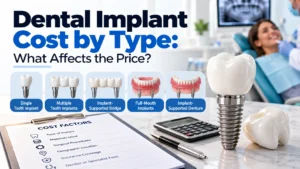

Dental implants can replace missing teeth and restore chewing function, but the cost is often one of the biggest concerns for patients considering treatment. If you are wondering how much do dental implants cost in the United States, the answer depends on several factors, including the number of teeth being replaced, the type of restoration, the condition of your jawbone, and whether additional procedures are necessary.
The National Institute of Dental and Craniofacial Research (NIDCR), part of the National Institutes of Health, reports that a dental implant procedure may cost $3,000 or more, including the implant, abutment, and crown. This is a general reference point, not a guaranteed price for every patient or procedure. (NIDCR — Oral Health in America)
Replacing one missing tooth is very different from replacing an entire arch of teeth. A single-tooth implant may require one implant and one crown, while full-mouth treatment can involve several implants, temporary teeth, bone grafting, and a larger prosthetic restoration.
Understanding what is included in an estimate can help you compare dental practices, evaluate insurance benefits, and avoid unexpected expenses.
This guide explains dental implant costs in the US, common treatment types, additional expenses, insurance coverage, financing options, and questions to ask your dentist before starting treatment.
Medical disclaimer: This article provides general educational information and is not a substitute for professional dental advice. Your dentist must evaluate your oral health and treatment needs to provide an individualized recommendation and estimate.
How Much Do Dental Implants Cost in the US?
There is no single nationwide price for every dental implant procedure. Costs vary according to the treatment required and the fees charged by the dental provider.
A useful starting point is the NIDCR estimate of $3,000 or more for an implant procedure that includes the implant, abutment, and crown. However, this reference should not be treated as a price list for every type of implant treatment.
For example, a patient replacing one tooth may need a relatively straightforward restoration. Another patient replacing several teeth may require an implant-supported bridge, while someone missing all their teeth may need a full-arch restoration.
The total cost can depend on:
- Number of implants required
- Type of crown, bridge, or denture
- Implant system and materials
- Bone grafting or sinus augmentation
- Tooth extractions
- Diagnostic imaging
- Anesthesia or sedation
- Dentist or specialist fees
- Geographic location
- Dental insurance benefits
- Temporary restorations and follow-up care
The US Food and Drug Administration (FDA) explains that dental implant systems include an implant body and an abutment that supports artificial teeth such as crowns, bridges, or dentures. (FDA — Dental Implants: What You Should Know)
This is why an advertised price for implant placement may not include the complete treatment.
Dental Implant Cost by Type
The type of implant restoration is one of the most important factors affecting the overall price. Different treatments require different numbers of implants, surgical procedures, and artificial teeth.
1. Single-Tooth Dental Implant
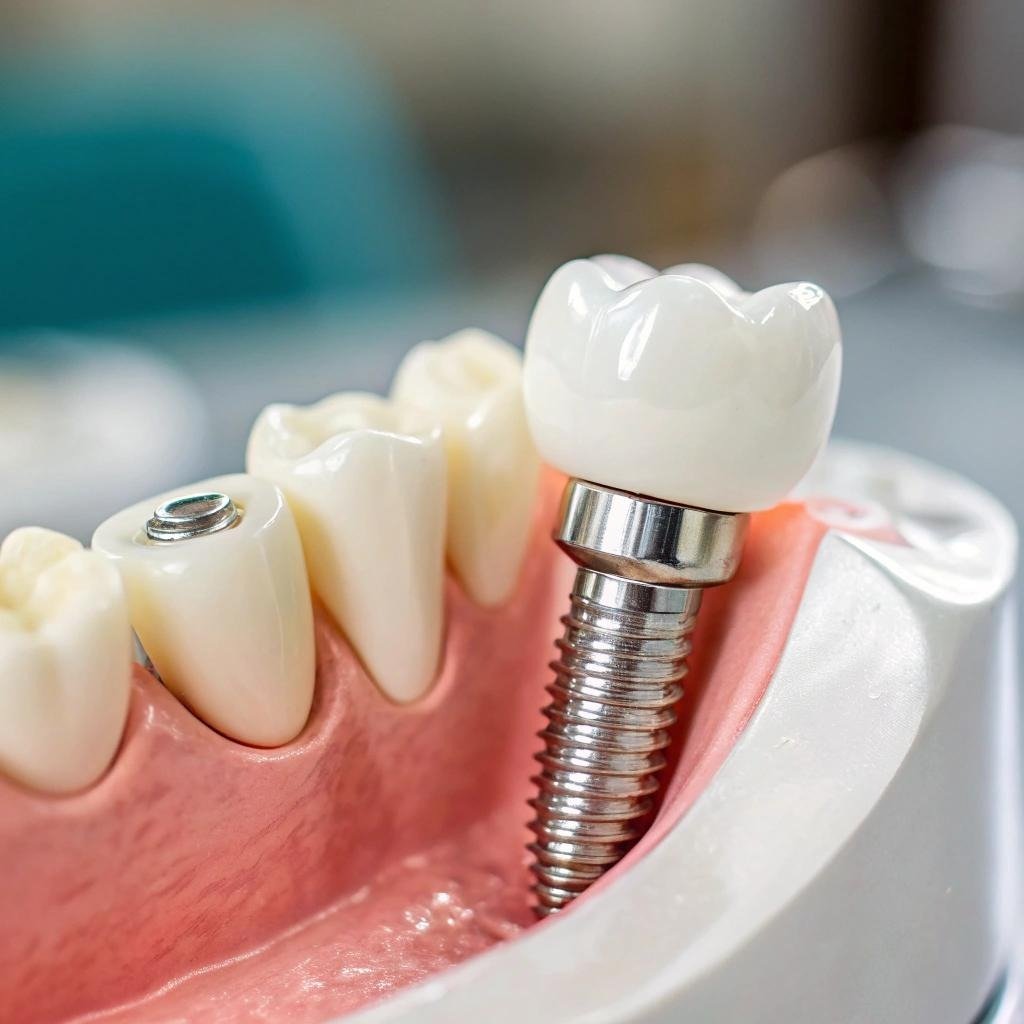
A single-tooth implant replaces one missing tooth. Treatment commonly includes the implant, abutment, and crown.
Main cost factors: Implant placement, crown material, imaging, extraction, and any required bone grafting.
The NIDCR’s $3,000-or-more reference provides a useful starting point for understanding the cost of an implant, abutment, and crown. Your actual quote may differ depending on your treatment needs.
2. Multiple-Tooth Implants
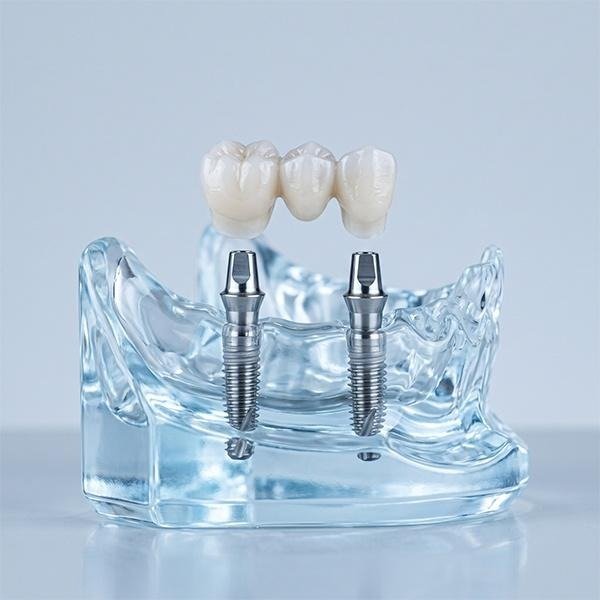
When several adjacent teeth are missing, a dentist may recommend individual implants or an implant-supported bridge.
Main cost factors: Number of implants, bridge design, bone condition, restoration materials, and surgical complexity.
Replacing three teeth does not always require three separate implants. The appropriate design depends on the patient’s anatomy and clinical assessment.
3. Implant-Supported Dentures
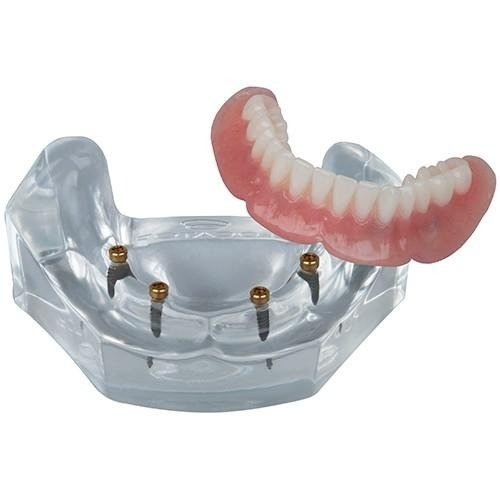
Implant-supported dentures use implants to improve the retention or support of a denture.
Main cost factors: Number of implants, attachment system, denture fabrication, extractions, and adjustments.
A removable implant-supported denture is different from a fixed full-arch restoration, so compare the complete treatment plans rather than relying on a generic implant price.
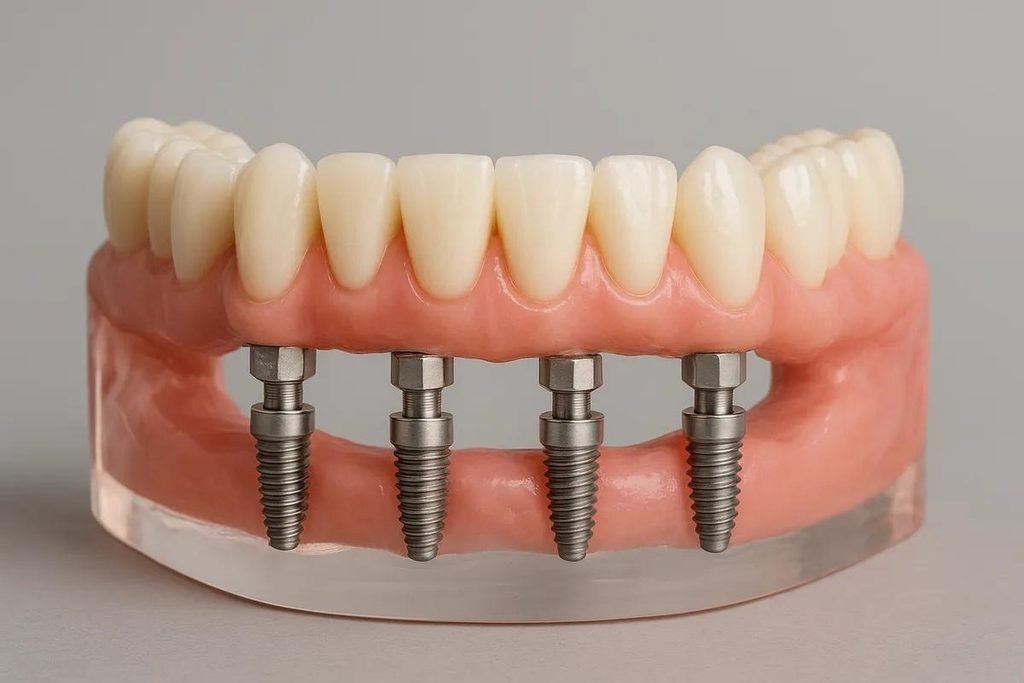
4. Full-Mouth or Full-Arch Dental Implants
Full-arch treatment replaces most or all teeth in the upper jaw, lower jaw, or both.
Main cost factors: Number of implants, prosthesis design, extractions, bone grafting, temporary teeth, anesthesia, and laboratory work.
These cases require individualized estimates because the surgical and restorative requirements can vary significantly between patients.
5. Mini Dental Implants
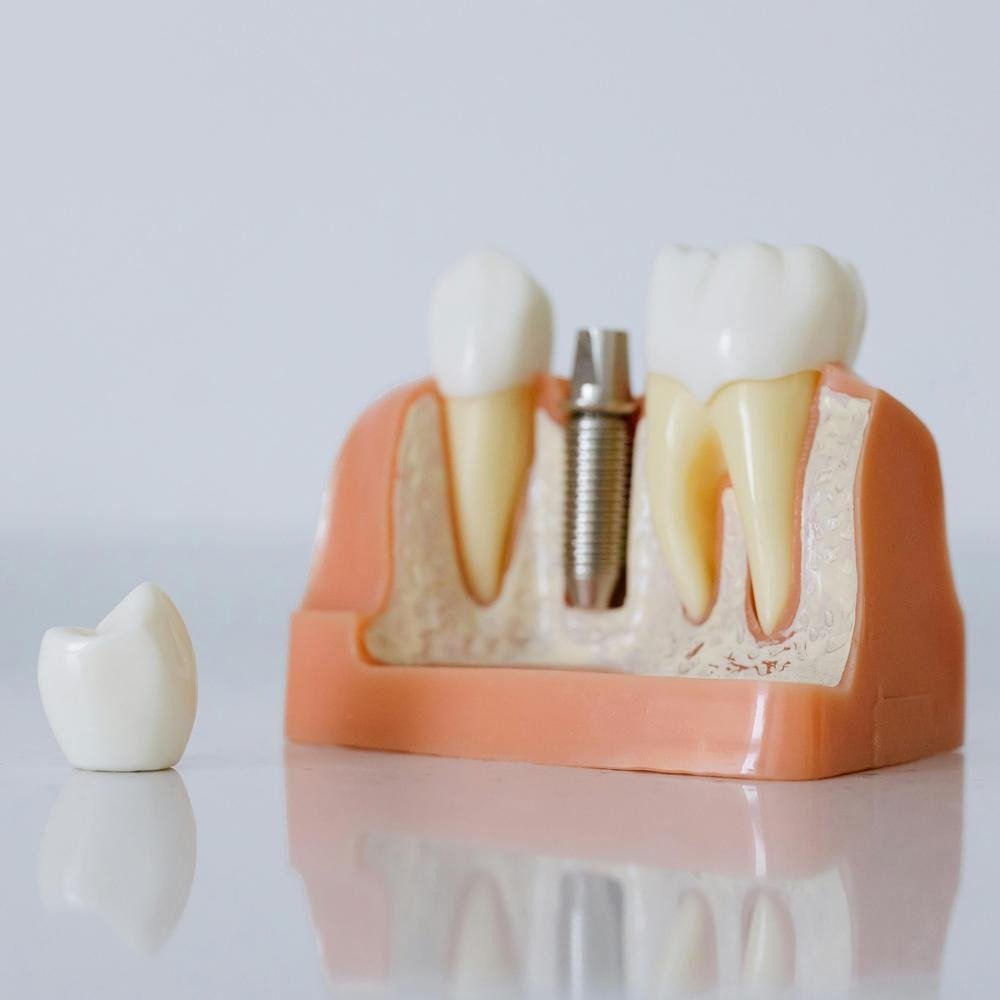
Mini dental implants are smaller-diameter implants that may be appropriate for selected clinical situations.
Main cost factors: Implant system, restoration design, number of implants, and clinical complexity.
A lower initial price does not automatically make a mini implant the right choice. Ask your dentist why the proposed implant type is appropriate for your particular needs.
For additional information about these treatment options, visit the American Academy of Periodontology’s dental implant resources.
What Is Included in the Total Dental Implant Cost?
When researching how much dental implants cost, check whether a quoted price covers the complete treatment or only one stage.
Consultation and diagnostic imaging
Before implant placement, your dentist may evaluate your gums, remaining teeth, jawbone, bite, and medical history. X-rays or three-dimensional imaging may be recommended when clinically appropriate.
Ask whether the consultation, scans, and treatment planning are included in the estimate.
Tooth extraction
If the damaged tooth is still present, it may need to be extracted before implant placement. The extraction fee may be separate.
Some patients may be candidates for immediate implant placement after extraction, while others need time for healing or additional treatment.
Implant placement
The implant body is surgically placed into the jawbone to support the replacement tooth. The surgical fee may be separate from the cost of the final restoration.
Abutment and crown
The abutment connects the implant to the crown. The crown is the visible replacement tooth.
Some dental practices bundle these components into one price, while others list them separately.
Temporary teeth and follow-up visits
Temporary restorations may be needed while the implant heals. Follow-up visits, adjustments, and additional imaging may also affect the final bill.
Before accepting a quote, request an itemized estimate showing which services are included and which may cost extra.
What Factors Affect Dental Implant Prices?
Several clinical and practical factors influence how much dental implants cost in the United States.
1. Number of implants
More implants generally require more surgical and restorative work. However, the number of implants is not always equal to the number of missing teeth because a bridge or other prosthesis may replace multiple teeth.
2. Bone grafting
If your jawbone does not have sufficient volume to support the proposed implant, your dentist may recommend bone grafting.
This can add surgical fees, graft material costs, healing time, and additional appointments. Bone grafting may be performed before implant placement or, in selected situations, during the same procedure.
3. Sinus lift surgery
A sinus augmentation, often called a sinus lift, may be recommended for some implants in the upper back jaw when there is insufficient bone height.
It is an additional procedure that may increase the overall cost.
4. Gum health
Periodontal disease may need to be treated before implant surgery. Healthy gum tissues and appropriate oral hygiene are important considerations when planning implant treatment.
5. Implant and crown materials
Dental implant systems use materials such as titanium or zirconium oxide. Crown and prosthesis materials also vary.
Your dentist can explain the materials being recommended, their intended use, and why they are appropriate for your situation. The FDA recommends asking your provider about the implant system’s brand and model and keeping that information for your records. Read the FDA’s dental implant guidance for more information.
6. Dentist and specialist fees
Depending on the case, treatment may involve a general dentist, periodontist, prosthodontist, or oral and maxillofacial surgeon.
Professional fees may vary based on geographic location, provider training, treatment complexity, and the services provided.
7. Geographic location
Dental practice expenses and local market conditions vary across the United States. Consequently, estimates may differ between metropolitan areas and smaller communities.
Do not select a provider based only on price. Diagnosis, treatment planning, surgical care, restoration quality, and follow-up are also important.
8. Anesthesia and sedation
Some procedures may require additional anesthesia or sedation services. Ask whether these costs, including any separate provider or facility fees, are included.
9. Long-term maintenance
Implants require regular dental visits and careful oral hygiene. Future expenses may include professional cleanings, examinations, repairs, or replacement of prosthetic components.
The initial quote is not necessarily the complete lifetime cost of maintaining your restoration.
Does Dental Insurance Cover Dental Implants?
Dental insurance coverage depends on your specific policy.
Some plans may cover certain implant-related services, while others exclude implants or impose restrictions. Even when benefits are available, annual maximums, deductibles, waiting periods, coinsurance, and missing-tooth clauses may affect your out-of-pocket cost.
Before treatment, ask your insurer:
- Are implants covered under my plan?
- Are the abutment and crown covered separately?
- Is bone grafting covered?
- Does a waiting period apply?
- Is prior authorization or a predetermination required?
- What is my annual maximum?
- Must I use an in-network dentist?
Request a written pre-treatment estimate when available. Remember that an estimate of benefits is not necessarily a guarantee of payment.
Does Medicare Cover Dental Implants?
Original Medicare generally does not cover routine dental services involving the care, treatment, removal, or replacement of teeth. Certain exceptions apply when dental services are integral to specific covered medical treatments.
Some Medicare Advantage plans offer additional dental benefits, but coverage varies by plan.
Check the official Centers for Medicare & Medicaid Services dental coverage guidance and confirm the details with your plan before scheduling treatment.
Does Medicaid Cover Dental Implants?
Adult dental benefits under Medicaid vary by state. States have flexibility in determining the dental services covered for adult beneficiaries, so coverage in one state does not necessarily apply in another.
If you have Medicaid, contact your state program or dental benefits administrator to confirm whether implants, extractions, dentures, or other relevant services are covered.
The official Medicaid.gov dental care page provides more information.
Can You Use an HSA or FSA for Dental Implants?
Potentially. Qualified dental expenses may be eligible for payment or reimbursement through a Health Savings Account (HSA) or Flexible Spending Account (FSA), subject to applicable federal rules and plan requirements.
Confirm eligibility with your benefits administrator before using the funds.
The IRS provides guidance on qualifying medical and dental expenses in Publication 502. Tax treatment depends on the circumstances, so do not assume every expense associated with an implant automatically qualifies.
How to Compare Dental Implant Quotes
Two dental offices may advertise different prices because they are quoting different parts of the treatment.
For a fair comparison, request a written, itemized estimate from each provider.
| Cost component | What to confirm |
| Consultation and imaging | Are examinations, X-rays, and scans included? |
| Extraction | Is removing the existing tooth included? |
| Implant placement | Does the fee cover the surgical procedure and implant? |
| Abutment and crown | Are both included in the total price? |
| Bone graft or sinus lift | Are additional surgical procedures included? |
| Temporary restoration | Will temporary teeth cost extra? |
| Anesthesia | Are sedation and facility fees included? |
| Follow-up care | Are post-surgical visits and adjustments included? |
| Insurance | What amount is estimated to be your responsibility? |
The lowest advertised price is not always the least expensive complete treatment. A quote that excludes the crown, grafting, or temporary teeth may eventually cost more than an initially higher, comprehensive quote.
How to Make Dental Implants More Affordable
If the total cost is higher than your budget, consider these options without compromising appropriate care.
Get a second opinion. A second qualified dentist can help you understand the proposed treatment and available alternatives.
Ask about dental schools. Some dental schools provide treatment through supervised student clinics, potentially at reduced fees. Availability, eligibility, and waiting times vary.
Review insurance benefits. Confirm which components may be covered and how much you are expected to pay.
Ask about payment plans. Some practices offer financing. Review interest rates, fees, repayment terms, and the total amount payable before signing an agreement.
Compare complete treatment plans. Ensure that each quote includes comparable services, materials, and follow-up care.
For general information about finding lower-cost dental care, visit the National Institute of Dental and Craniofacial Research.
Are Dental Implants Worth the Cost?
Whether implants are worth the cost depends on your oral health, clinical needs, preferences, and budget.
Dental implants can support artificial teeth and help restore chewing function and appearance. However, implant treatment involves surgery, healing time, maintenance, and potential complications. Some patients may be better suited to a bridge or removable denture.
The FDA advises patients to discuss the benefits, risks, and suitability of implant treatment with their dental provider. You can review its official dental implant guidance.
A dentist can explain the advantages and disadvantages of each option based on your individual situation.
Frequently Asked Questions
How much do dental implants cost in the US?
The NIDCR reports that an individual dental implant procedure may cost $3,000 or more when the implant, abutment, and crown are included. Actual prices vary according to the treatment required and the provider’s fees.
Is the crown included in the implant price?
Not always. Some providers bundle the implant, abutment, and crown, while others charge for them separately. Ask for a complete written estimate.
Why do dental implant prices vary so much?
The number of implants, type of restoration, bone condition, additional procedures, materials, provider fees, and geographic location can all affect the total price.
Does dental insurance pay for implants?
It depends on your policy. Check coverage exclusions, annual maximums, waiting periods, deductibles, and any restrictions on implant-related procedures.
Does Medicare pay for dental implants?
Original Medicare generally excludes routine dental implant treatment, although certain dental services integral to covered medical treatment may qualify. Some Medicare Advantage plans offer additional dental benefits.
Can dental implants be financed?
Some dental offices offer payment plans or third-party financing. Review interest, fees, repayment periods, and the total cost before committing.
Is a dental implant better than a bridge?
Neither option is best for every patient. The appropriate choice depends on oral health, the condition of neighboring teeth, bone availability, clinical needs, and budget.
Final Thoughts
If you are researching how much do dental implants cost, focus on the complete treatment rather than a single advertised price.
The NIDCR’s $3,000-or-more reference for an implant, abutment, and crown provides a useful starting point, but it is not a universal price. Multiple implants, full-arch restorations, bone grafting, extractions, and other procedures can substantially change the total.
Before making a decision, ask for an itemized treatment plan, verify your insurance benefits, compare qualified providers, and discuss alternative treatments with your dentist.
A transparent estimate helps you understand what you are paying for, prepare for additional expenses, and make a better-informed decision about your dental care.
Authoritative Sources
The following U.S. sources support the clinical, cost, and coverage information in this article:
- NIDCR — Oral Health in America: National reference for implant procedure cost.
- FDA — Dental Implants: What You Should Know: Implant components, benefits, risks, and patient considerations.
- American Academy of Periodontology — Dental Implant Procedures: Implant treatment options and clinical considerations.
- CMS — Medicare Dental Coverage: Medicare dental coverage and exceptions.
- Medicaid.gov — Dental Care: State variation in adult Medicaid dental benefits.
- IRS — Publication 502: Federal tax guidance for medical and dental expenses.